Author’s articles

Corporate Bonds: 5–8% Yields from Blue-Chip Companies — The Income Step-Up from Treasuries
Corporate bonds offer investors premium yields over government securities with investment-grade protection. These company-issued debt instruments deliver reliable income streams for portfolios seeking higher returns without excessive equity risk. What Are Corporate Bonds? Corporate bonds represent loans to businesses issued to fund operations, acquisitions, expansions, and refinancing. Investors receive periodic interest payments (coupons) and principal

Government Bonds: Risk-Free 4–6% Returns Backed by Sovereign Credit
Government bonds remain the bedrock of institutional portfolios worldwide. These sovereign debt securities offer principal protection with predictable income, serving as the ultimate safe haven during market turbulence while delivering competitive yields in stable environments. What Are Government Bonds? Government bonds are debt securities issued by national governments to finance budget deficits, infrastructure spending, and

Municipal Bonds: Steady 3–5% Tax-Free Income Backed by Local Governments
Municipal bonds offer conservative investors reliable income with federal tax advantages. These debt securities issued by cities, counties, and states fund essential infrastructure while providing yields typically 3–5% tax-free — making them a cornerstone of balanced portfolios worldwide. What Are Municipal Bonds? Municipal bonds ("munis") are debt securities issued by state and local governments to

High-Yield Bonds: Unlock 6–12% Returns When Treasuries Pay 3–4%
High-yield bonds deliver superior income for investors willing to embrace calculated risk. Also known as junk bonds, they offer a compelling balance of yield, diversification, and moderate volatility – making them a staple in professional portfolios worldwide. What Are High-Yield Bonds? High-yield bonds are corporate debt securities rated below investment grade (BB+/Ba1 or lower by

Silver Investments 2026: Complete Guide — From Bullion to Crisis Protection
Silver hits $120+ oz in 2026. Buy bullion/ETFs, protect capital from crisis. US taxes 0-20% LTCG, storage costs, risks, portfolio allocation 5-15%. 35K facts guide.

What $100,000 Became After One Year: Full Ranking of 15 Assets
Investors who allocated $100,000 a year ago across 15 popular assets achieved dramatically different results. Silver surged 243% (+$242,000 profit), while memecoins lost 70–99% of their value. The analysis reveals: metals delivered steady growth, the cryptocurrency market remained volatile, and altcoins continued declining. Full One-Year Performance Ranking (Jan 2025–2026) 🥇 Leaders: Metals Dominate Silver: +243%

Bitwise: Bitcoin Recovers Faster Than Gold — But Together They’re Hard to Beat
The public debate around Bitcoin vs. gold is often framed as an “either/or” choice: a high-volatility digital asset versus a centuries-old safe haven. Bitwise’s research and product design point to a more practical conclusion: these assets tend to play different roles in a portfolio—gold as a drawdown buffer and Bitcoin as a high-octane recovery engine—so

Gold vs. the Russian Ruble: Why Gold Can Be a Practical Hedge for 2026 (Facts Only)
If your income and spending are mostly in Russian rubles, “portfolio risk” in 2026 usually comes down to two variables you can’t fully control: RUB purchasing power (inflation / domestic price dynamics)RUB exchange-rate risk (especially versus the U.S. dollar) Gold is often discussed as a hedge because gold priced in rubles is effectively a combination
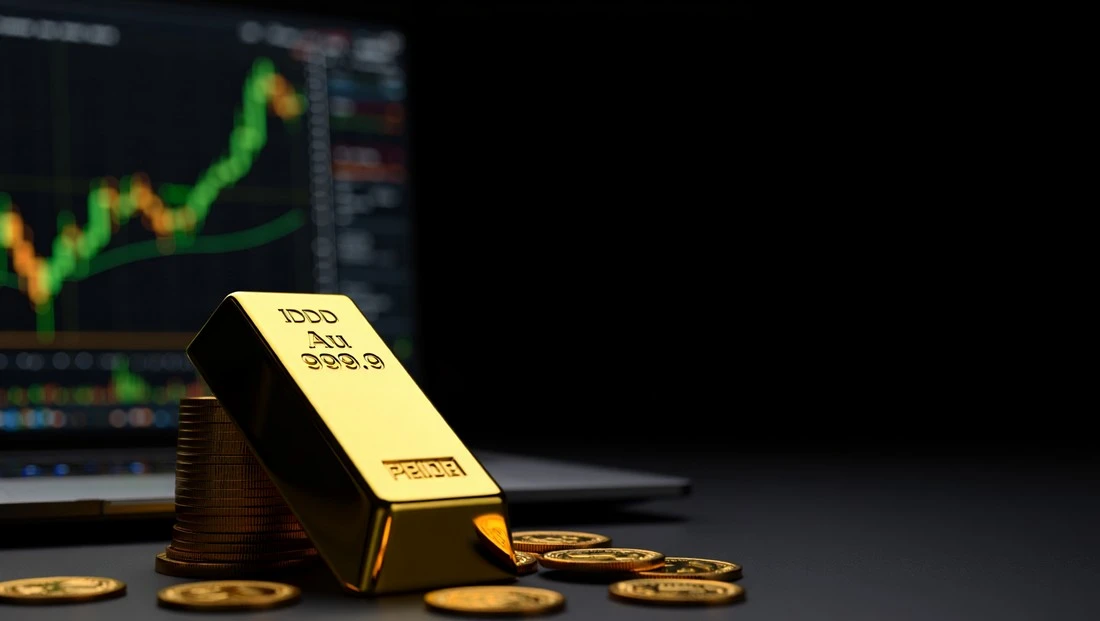
Gold Rush 2026: How to Make Money With Precious Metals (Without Myths)
Gold is back in the headlines for a simple reason: it just had an exceptional year. Reuters reported gold gained about 64% in 2025—its strongest annual performance since 1979—and major banks are openly publishing aggressive 2026 scenarios (HSBC: possible $5,000/oz in H1 2026; Morgan Stanley: $4,800/oz by Q4 2026), while warning about volatility and potential

Top 5 Quantum Computing ETFs to Buy in 2026
The top 5 ETFs in quantum computing for purchase in 2026 offer an accessible way to invest in breakthrough technologies, where the quantum computer market is projected to grow to $10 billion by 2030 according to McKinsey estimates.