Author’s articles

Quality of Earnings Explained: Cash Conversion, One-Off Gains and Accounting Red Flags
Learn how to assess earnings quality using cash flow, receivables, one-off gains and adjusted EBITDA, with examples and a practical 10-K review checklist.
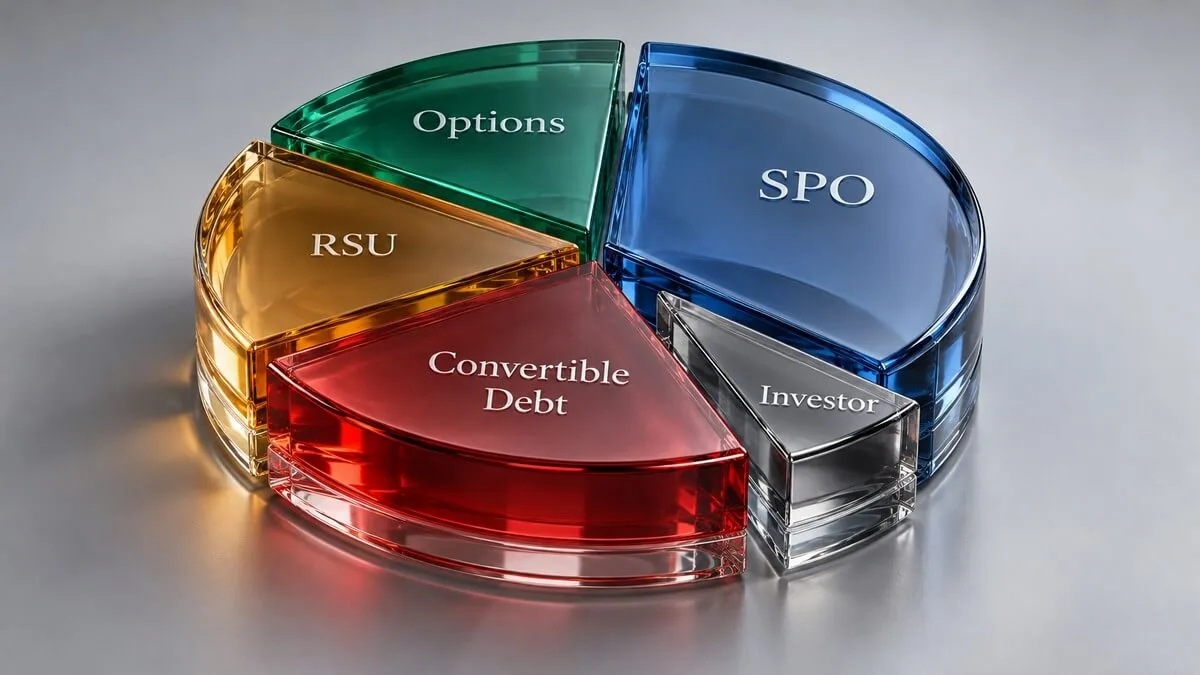
Dilution Explained: Share Issuance, Stock Options, Convertible Debt and Diluted EPS
Learn how new shares, options, RSUs and convertible debt dilute shareholders. Calculate ownership, read diluted EPS and assess the impact on value per share.

Stock Buybacks Explained: When Repurchases Create Shareholder Value and When They Hide Dilution
A practical guide to stock buybacks: how share repurchases work, when they create shareholder value, how they affect EPS, free cash flow, debt, dividends and dilution, and when buybacks can hide weak fundamentals.

How to Choose Dividend Stocks: Dividend Yield, Payout Ratio, Free Cash Flow, Debt, Taxes, and Common Investor Mistakes
A practical guide to choosing dividend stocks: dividend yield, payout ratio, free cash flow, debt, dividend safety, taxes, valuation, yield traps, and common investor mistakes.

Qualified Dividends vs Ordinary Dividends: How U.S. Investors Are Taxed, What Form 1099-DIV Shows, and How to Avoid Costly Mistakes
Dividends look simple from a distance. A company earns money, the board approves a payout, and shareholders receive cash in their brokerage account. For many investors, dividends feel more tangible than price appreciation because the money actually arrives. That simplicity is exactly why dividend investing attracts beginners, income investors, retirees, portfolio builders, and short-term traders

Dividend Gap and Ex-Dividend Date: When to Buy Stocks for Dividends and Why Dividend Income Is Not Free Money
Dividends look simple from a distance. A company earns money, the board approves a payout, and shareholders receive cash in their brokerage account. For many investors, dividends feel more tangible than price appreciation because the money actually arrives. That simplicity is exactly why dividend investing attracts beginners, income investors, retirees, portfolio builders, and short-term traders

Apple Dividend Calendar 2026: Exact Dates to Buy AAPL Stock Before Ex-Dividend
Q2 2026 marks peak dividend season for U.S. blue chips. Apple (AAPL) maintains its quarterly $0.26/share payout with 0.41% yield at $253/share. Next ex-dividend date: May 12, 2026 — buy May 11 (T-1) before 4 PM ET.Apple dividend timeline: T-1 May 11 → Ex-date May 12 → Payment May 15 Apple Dividend Schedule Q2 2026

Trust Management for Capital: Professional Wealth Strategies That Deliver
Trust management for capital represents a sophisticated approach to wealth preservation and growth, where licensed asset managers take control of diversified portfolios under strict regulatory oversight. Private clients delegate investment decisions to professionals who execute strategies tailored to specific risk profiles and return objectives, with full transparency and legal accountability. In mature markets, this model

Trust Management Strategies: 12–25% Returns — Verified 2026 Data
Trust management delivers professional portfolio oversight through regulated asset managers executing diversified strategies. Conservative fixed income targets 8–12% annual returns while high-yield credit leaders achieve 20–25% net of fees — outperforming retail benchmarks by 5–10% with institutional risk controls. What Is Trust Management? Trust management delegates investment decisions to licensed firms via contracts defining performance

Coupon Bonds: Reliable Semi-Annual Income from the World's Largest Debt Market
Coupon bonds form the backbone of global fixed income investing. These traditional debt securities deliver predictable interest payments every 3–6 months alongside principal repayment at maturity, offering institutional-grade income streams for conservative portfolios worldwide. What Are Coupon Bonds? Coupon bonds pay investors periodic interest (the "coupon") based on a fixed or floating percentage of face