
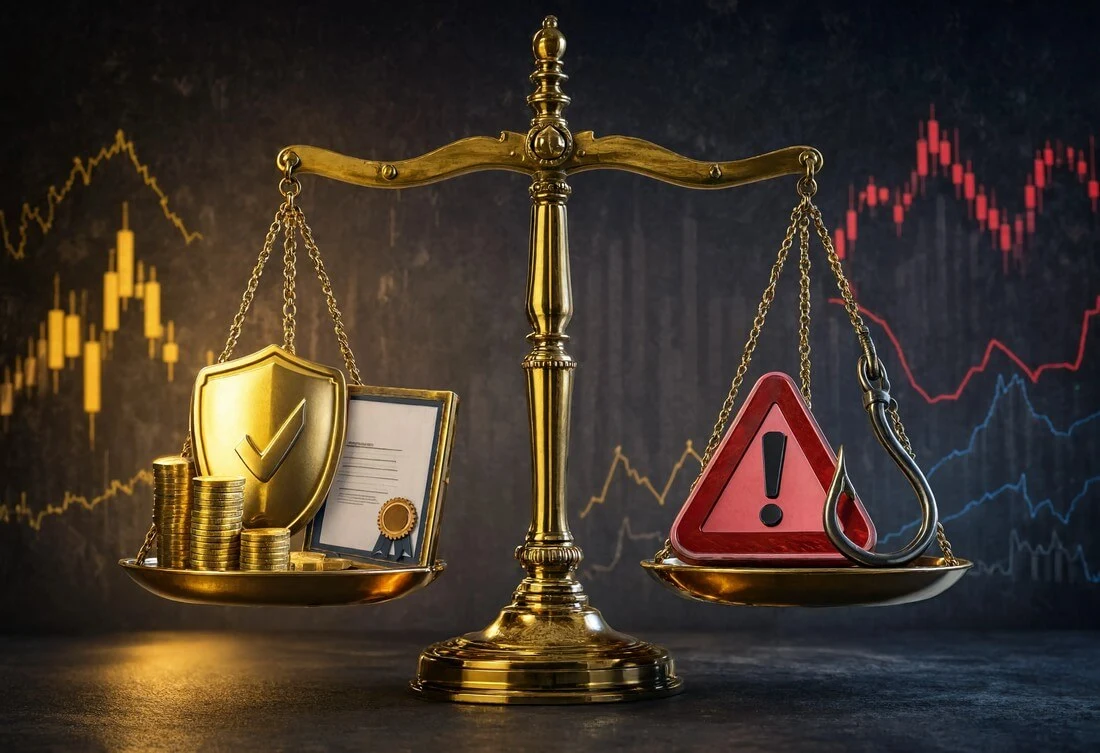
Choosing a broker in 2026 is not just about spreads, platforms, or bonuses. It is about whether the company is real, regulated, and operationally safe. In a market where clone firms, offshore schemes, fake licenses, Telegram-based “managers,” and aggressive sales funnels are everywhere, broker due diligence has become a basic survival skill for traders and investors.
This guide explains how to check a broker step by step, which red flags matter most, where to verify licenses, and how to avoid scams before you deposit a single dollar. The goal is simple: help you assess not only whether a broker looks professional, but whether it can actually be trusted with your funds.
Why broker verification matters
A polished website does not prove a broker is legitimate. Many fraudulent companies copy the branding of known firms, fabricate awards, invent “regulatory” claims, and create pressure through account managers who push for deposits, leverage, or urgent transfers. In practice, the biggest losses often happen not because a trader misunderstood the market, but because the broker itself was fake, unlicensed, or operating outside any meaningful oversight.
That is why a real due diligence process should combine regulatory checks, company verification, contact analysis, payment analysis, and review of communication behavior. If you skip those steps, you are not just taking market risk — you are taking counterparty risk.
Step 1: Check the legal entity
Start with the broker’s exact legal name. A legitimate broker should clearly disclose its registered company name, registration number, jurisdiction, and, where applicable, the name of its licensed entity. If the website only shows a brand name but hides the legal company, that is already a warning sign.
Once you have the company name, verify it through the official business registry of the claimed jurisdiction. Cross-check the address, directors, and incorporation date. If the legal entity is very new but the website claims years of market experience, that is a mismatch worth investigating.
Step 2: Verify the license
A license claim is only useful if it can be confirmed in the regulator’s own database. The source text highlights the importance of checking brokers through official registers such as the FCA Financial Services Register, SEC/FINRA BrokerCheck, CySEC, and ASIC.
If the broker claims to be regulated, do not rely on a PDF certificate or a screenshot. Open the regulator’s website and search for:
- the company name;
- the license number;
- the domain;
- the registered address;
- the approved activity type.
A serious mismatch — for example, a company name that exists but does not cover brokerage services, or a license that belongs to another brand — is a major red flag.
Step 3: Look for clone-firm behavior
Clone firms are one of the most common fraud patterns in the brokerage sector. These are companies that copy the name, branding, logo, or contact details of a real regulated broker in order to trick clients into believing they are dealing with the original firm.
Typical signs include:
- a domain that looks similar to the legitimate broker’s website but is not the same;
- emails from unusual domains;
- “support” claiming to represent a famous broker but contacting you through Telegram or WhatsApp;
- mismatched license data;
- pressure to move quickly because an “offer” expires soon.
If the broker looks almost real but something feels off, always compare the website domain with the official regulator listing. That one step eliminates a large share of clone-firm scams.
Step 4: Review the contact channels
A legitimate broker should provide stable and professional contact channels. That usually means:
- an official corporate email;
- a working support system;
- a verifiable phone number;
- a physical business address;
- a website that matches the company identity.
Be cautious if the broker relies heavily on:
- Gmail, Outlook, Proton, or other free email services for official communication;
- Telegram or messengers as the main support channel;
- vague “office” addresses that cannot be verified;
- multiple competing domains or websites with slightly different names.
A professional operation can still use multiple channels, but those channels should be consistent and verifiable. When the contact footprint looks improvised, the risk rises fast.
Step 5: Check the website and domain history
The website often reveals more than the sales team does. Look at:
- domain age;
- website history;
- changes in branding or ownership;
- whether the site suddenly appeared recently but claims long operating experience;
- whether the legal terms match the website claims.
A broker that appears “old” on the homepage but has a very new domain registration should be treated with caution. If possible, also check whether the domain is linked to multiple suspicious campaigns or redirected pages.

Step 6: Analyze deposit and withdrawal rules
One of the strongest indicators of broker quality is how it handles client money. Read the deposit, withdrawal, and refund policies carefully. Pay special attention to:
- withdrawal timelines;
- identity verification requirements;
- minimum withdrawal amounts;
- fees;
- refund conditions;
- third-party payment restrictions;
- chargeback-related language;
- whether withdrawals require “tax payments,” “unlock fees,” or extra deposits before release.
A broker that makes deposits easy but withdrawals difficult is a classic warning sign. In a legitimate setup, the money flow should be transparent and documented from the start.
Step 7: Examine account manager behavior
Aggressive account managers are often part of the problem. The source material notes that scam brokers frequently use urgency, pressure, and manipulation to push additional deposits or to prevent clients from thinking clearly.
Watch for:
- constant calls urging you to deposit more;
- promises of low-risk profits;
- “limited-time” opportunities;
- claims that you must act immediately;
- instructions to install remote-access tools or share wallet seeds, SMS codes, or screen access;
- attempts to move communication outside the official platform.
A real broker may offer support and product education, but it should not behave like a salesperson trying to corner you into a rushed decision.
Step 8: Search for sanctions and enforcement actions
Before opening an account, check whether the broker or its directors appear in:
- sanctions databases;
- regulator warning lists;
- enforcement notices;
- consumer complaints databases;
- fraud reports.
The source text specifically emphasizes the need to pay attention to regulatory warnings, blacklists, and clone-firm alerts. If the broker is under a warning notice, that does not always mean it is an outright scam, but it does mean you should be very careful and verify the details independently.
Step 9: Check reviews the right way
Reviews can help, but only if you read them critically. Ignore generic five-star praise written in the same style across multiple sites. Focus instead on:
- withdrawal experiences;
- account freezes;
- verification problems;
- support quality;
- whether complaints are specific and consistent;
- whether the same complaint appears across different platforms.
The source material also suggests checking community evidence from emails, screenshots, PDFs, and transaction records when reviewing a broker’s behavior. That is the right approach: real evidence matters more than marketing language.
Step 10: Test the broker with a small amount
If the broker passes the basic checks, the safest next step is to test the platform with a small deposit and a small withdrawal. Do not start with a large transfer.
A real broker should allow you to:
- deposit normally;
- trade on the promised platform;
- submit a withdrawal request without artificial obstacles;
- receive funds within the stated time frame;
- complete basic KYC without bizarre extra demands.
If problems begin immediately after the first withdrawal request, that is a strong sign that the broker’s real business model may not be trading at all.
Common scam patterns
The source document points to a broad ecosystem of fraud: P2P schemes, DeFi scams, NFT schemes, pre-IPO promises, fake investment products, and high-pressure marketing tactics. In the broker world, the same logic usually appears in a slightly different form:
- fake returns;
- fake regulation;
- fake support;
- fake urgency;
- fake bonuses;
- fake recovery offers.
If the promise sounds like guaranteed profit, it is usually a sales trap. Real brokers do not eliminate risk; they only provide market access.
Final checklist
Before trusting a broker, make sure you can answer these questions clearly:
- What is the exact legal entity?
- Which regulator licenses it?
- Does the license exist in the official register?
- Is the website domain consistent with the regulated company?
- Are the contact details professional and verifiable?
- Are deposit and withdrawal rules transparent?
- Does the account manager pressure you?
- Has the broker been flagged by regulators?
- Can you withdraw a small test amount successfully?
If even two or three of those answers are unclear, you should slow down and investigate further. In brokerage, uncertainty is often the first warning sign.
Conclusion
Checking a broker in 2026 is not complicated, but it does require discipline. The safest approach is to verify the legal entity, confirm the license in the regulator’s own database, inspect the domain and contact details, review the withdrawal policy, and test the platform carefully with a small amount first.
The more professional the broker looks, the more important it is to verify the facts behind the branding. Real protection comes from evidence, not from polished websites or persuasive sales calls.
Publication author


